Walk through any busy CNC machine shop and you can almost hear the cost of a bad tooling choice. Spindle time rises, surface finish falls, tool life evaporates, and operators start riding the feed hold. Tooling selection is not a catalog exercise, it is a chain of decisions that shapes throughput, quality, and margins. Whether you run a precision CNC machining cell inside a larger manufacturing shop or a stand‑alone machining manufacturer serving build to print customers, the right tool in the right holder on the right strategy will decide if your quote holds or bleeds.
This is a practical guide drawn from shop floors that cut everything from 6061 manifolds to Inconel compressor rings and quenched 4340 shafts. The aim is simple: help you choose tooling that boosts productivity without gambling reliability, with an eye on the realities of a canadian manufacturer working across industrial machinery manufacturing, mining equipment manufacturers, food processing equipment manufacturers, and custom metal fabrication shops.
Productivity starts before the tool is in the spindle
The first step happens at the print review. If you rush to load a 3‑flute and hit cycle start, you already accepted someone else’s constraints. Prints tell you material, geometry, tolerance stack, and implied economics. A mining customer asking an Underground mining equipment suppliers’ component in AR400 demands abrasion resistance in service, which translates to pain at the spindle. A food‑grade 316L pump body from a sanitary line calls for a different playbook: burr control, surface finish, and low work hardening.
I keep a whiteboard with three columns for every new job: material class, dominant operation, and risk points. Material class links to a short list of proven cutters and coatings. Dominant operation, such as roughing pockets or finishing bores, frames the strategy. Risk points force you to address things like thin walls, interrupted cuts, or long reach early. If the part comes from a steel fabricator upstream, I also note distortion from welding or heat, which affects chipload selection and fixturing.
For build to print contracts, tool selection also depends on the tolerance to which you must actually hold. A flatness callout of 0.05 mm on a baseplate for logging equipment can be met with a wide shell https://pastelink.net/rokqmqab mill and a balanced holder. A 0.005 mm true position on a precision bore for a custom machine spindle seat demands a finishing reamer or a high‑accuracy boring head with a certified holder and tight thermal control. Same material, two completely different tooling trees.
Material dictates the playbook, then geometry refines it
Think in families, not individual SKUs. This avoids re‑learning lessons and keeps purchasing clean.
- Aluminum and free‑machining copper alloys: Prioritize flute volume, sharp edges, polished flutes, and high helix. For 6061, a 3‑flute rougher with a ZrN or uncoated mirror finish, 0.08–0.12 mm/tooth on a 10 mm tool at 25,000–35,000 mm/min, will move metal fast on a modern 12k spindle. For finishing, a 2‑flute or 3‑flute with a wiper geometry gives mirror walls. If your cnc metal cutting centers are older and top out at 6k, increase chipload slightly to avoid rubbing and let surface speed fall. Low carbon and alloy steels: A 4‑flute or 5‑flute variable pitch with a TiAlN/TiCN class coating is the workhorse. Run more conservative chiploads in 1018 to prevent built‑up edge, and bump coolant concentration a touch. In 4140 at 30–35 HRC, a 5‑flute with chip splitters reduces spindle load and evacuates heat. For slotting, keep radial engagement under 20 percent to avoid heat soak. Hardened steels, tool steels: This is where geometry and coating discipline matter. Micro‑chamfers at the cutting edge, polished gashes, and AlTiN or AlCrN coatings pay off. On a 10 mm 6‑flute finishing end mill in 52 HRC, I’ll run 0.02–0.04 mm/tooth with 0.2 mm stepover and flood off, relying on air blast to keep chips clear and avoid thermal shock. For dies and molds in a cnc precision machining context, shift to ball or barrel tools with long engagement but light chip thickness. Stainless, nickel alloys, titanium: Sharp, strong edges with ground flutes and heat‑resistant coatings, high pressure through‑coolant for drills if you have it. Keep engagement constant. Adaptive clearing with small radial engagement and higher axial depth shines in Inconel. Use 3‑flute tools in titanium to balance chip space and rigidity. If you must slot in Inconel, open with a trochoidal path and keep the floor free of recut chips. Abrasive wear plates and castings: Plan for the dust. Use coated carbide with robust edge prep. For AR400 and AR500 baseplates common in mining equipment manufacturers and steel fabrication, a 4‑flute with chip splitters and AlCrN coating plus a strong holder reduces chatter. Increase filtration and inspect way covers more often.
These heuristics feed your tool library. Avoid one‑off hero tools unless the part justifies it. A Machine shop or cnc machine shop that keeps a disciplined but compact library can pivot across jobs, from biomass gasification burner plates to precision spacers for industrial design company prototypes, without killing setup time.
Holders, runout, and the quiet killers of tool life
Tool geometry gets the attention, holders quietly decide the outcome. Every micron of runout cuts tool life dramatically. In finishing aluminum, 0.01 mm TIR can double burrs. In hardened steel, it can halve tool life.
For roughing, high‑quality ER collets work if they are fresh and you measure TIR. Replace collets regularly, not when they look bad, but on hours. For finishing or micro tools, move to hydraulic or heat‑shrink holders. A 6 mm shrink holder with 0.003 mm TIR versus an ER at 0.02 mm is night and day on a 0.3 mm radial finish pass. Hydraulic holders also damp vibration, helpful when the part rings, such as thin pump covers in food processing equipment lines.
Balance matters as spindle speed climbs. On 15k spindles, an unbalanced assembly can turn a stable 5‑flute hero into a chatty mess. If you run a lot of aluminum at high speed, invest in balanced holders and keep assemblies short. On older cnc machining shop equipment with 6k spindles, damping helps more than perfect balance, so hydraulics shine.
Stickout is the cheapest performance lever. If you shorten stickout from 50 mm to 35 mm on a 10 mm tool, you can often raise mining equipment manufacturers chipload 10–20 percent with better surface finish. In custom fabrication work, parts often force long reach. In those cases, drop flute count, use variable pitch, and cut radial engagement to stay out of chatter bands.
Coatings and edge prep, not glitter but grit
Coating selection maps to heat management and chemistry. AlTiN and AlCrN like heat, so they excel dry or with air blast in steels. In aluminum, avoid standard TiN or AlTiN on wrought alloys to prevent built‑up edge. ZrN, DLC, or polished uncoated tools do better. In titanium and nickel alloys, nanocomposite coatings with higher hot hardness protect edges when you cannot evacuate heat quickly.
Edge prep is the part most catalogs bury. A tiny hone at the cutting edge, say 5–10 micrometers, toughens the edge for steels and cast irons. For gummy aluminum, reduce edge prep to keep the edge sharp. When you swap vendors, match edge prep style or your feeds and finishes drift.
If your welding company sister division sends welded subassemblies for machining, expect hard spots and mill scale. A slightly larger edge hone on roughers reduces micro‑chipping when you hit those zones, then switch to sharper finishers once past.
Productivity math: MRR, cycle time, cost per part
The tool that removes metal fastest is not always the cheapest per part. Productivity balances MRR, reliability, and cost per millimeter of edge. I keep three quick checks:
- Can the workholding and machine swallow the forces implied by the chip thickness and engagement? If the answer is “maybe,” you will lose time to chatter hunting. Dial back. Is the coolant delivering chip evacuation and thermal control for the tool geometry? High MRR without chip clearance just recuts chips and kills edges. Can the shop repeat this performance across shifts? A setup that needs one guru at 2 am is not productive in a real manufacturing shop.
For example, a 20 mm 7‑flute in 4140 might promise 300 cc/min MRR at 0.05 mm/tooth and 15 percent radial. If your fixture is a modest vise with soft jaws on a mid‑range VMC, accept 180–220 cc/min and a happier spindle. The difference in cycle time might be 90 seconds on a 12‑minute op, but you save two tool changes across 100 parts due to longer life and avoid a scrapped batch. On a build to print order for a canadian manufacturer customer who values delivery consistency, that margin of reliability is worth more than bragging rights.
Drilling and holemaking: the hidden cycle‑time drain
Holes drive more real cycle time than any other operation in many cnc metal fabrication and precision cnc machining jobs. Pick drills that match your coolant, hole depth, and material. Through‑coolant carbide drills with point geometry tuned for the material are worth the spend once you exceed 3xD in stainless or nickel alloys. Pecking burns time and wrecks edges.
For general steel at 3xD to 5xD, a parabolic HSS‑Co drill can be cost‑effective in lower volume, but on recurring work, a solid carbide through‑coolant drill at double or triple the surface speed will pay off in a few batches by eliminating pecks and tool changes. In stacked plates from steel fabrication with scale and interruptions, consider a tougher substrate or even indexable drills for anything over 14 mm.
Reaming and boring for tight bores: If you hold IT7 or better, a floating reamer holder, the right coolant, and a matched reamer give excellent repeatability. For ultra‑tight locations or true roundness on bearing seats, a fine‑adjust boring head wins. Don’t skip a chamfer or spotface, especially in stainless, or the reamer will push and bellmouth.
Strategies beat single numbers
A tool is only as good as the path that drives it. Modern toolpaths like adaptive clearing or constant engagement milling are not boutique features, they are productivity tools when matched to the geometry. A simple rule set works across many cnc machining services:
- Keep radial engagement low, axial high, in tough materials. This controls heat and keeps chip thickness predictable. Avoid full slotting when possible. If you must slot, open a pilot or ramp with a helical entry and clear chips aggressively. Use rest machining to let a smaller finisher remove only what is left, preserving edges and finishes. Finish with fewer flutes in gummy materials, more flutes in hard, stable cuts. For thin walls, climb cut with a spring pass only if measurement proves it helps.
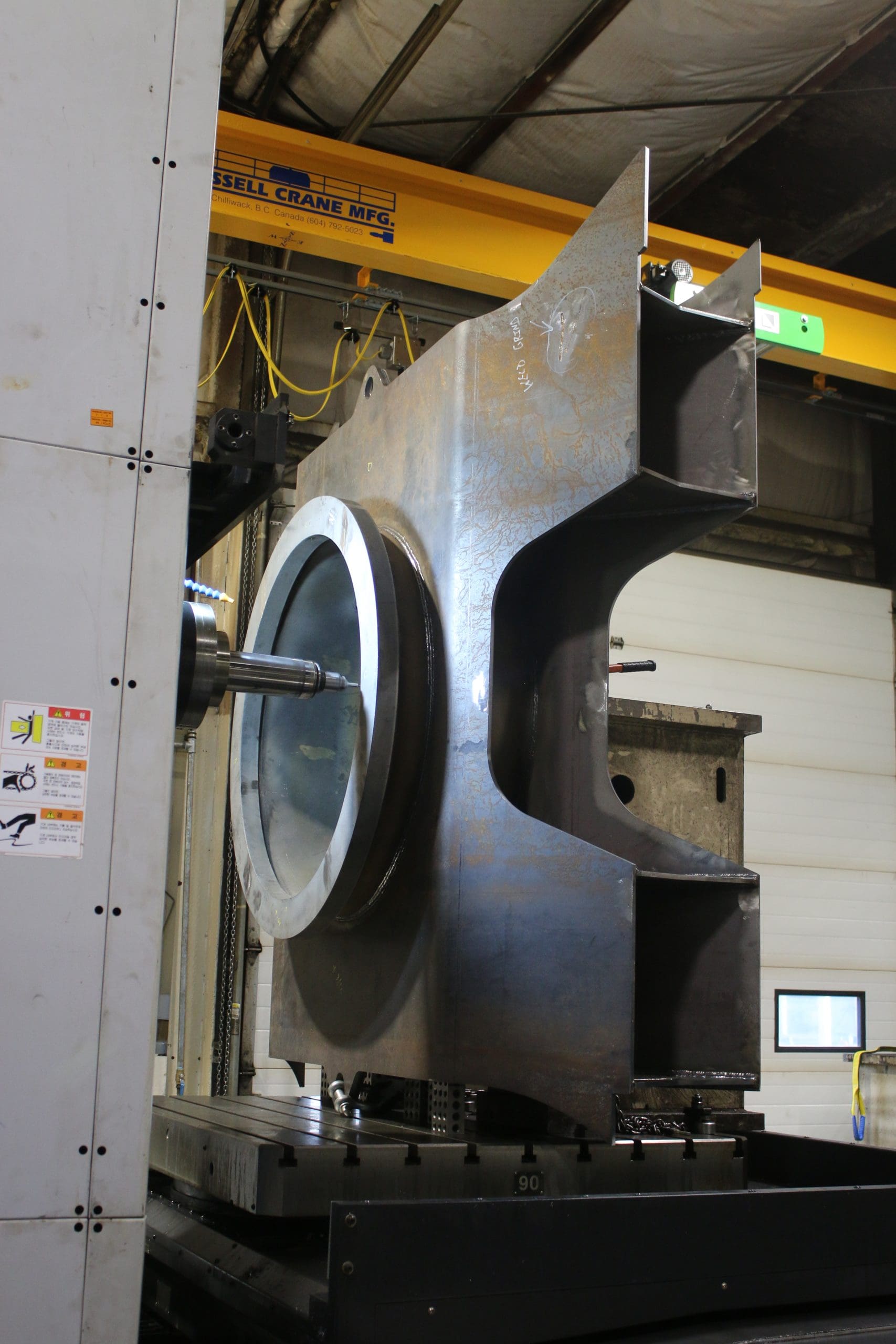
For custom machine frames and large plates common in industrial machinery manufacturing, face milling strategy also matters. A 63 mm high‑feed face mill taking 1.5 mm axial at 1 mm/rev can outperform a 100 mm shell mill that looks impressive but chatters on a light column machine. Evaluate your machine stiffness and pick cutters that keep forces axial rather than radial.
Real incidents that sharpen judgment
Two examples from the floor:
- AR400 wear plate pockets for a mining chute: The first run used a standard 4‑flute TiAlN end mill at 0.05 mm/tooth, 15 percent radial, and flood coolant. Tools chipped after 25 minutes. We switched to AlCrN with a beefier edge hone, air blast only, and reduced radial to 10 percent while increasing axial. Tool life tripled to 80–90 minutes, and cycle time dropped eight percent because we kept the feed higher without babying chatter. 316L sanitary manifold for a food processing line: Initial setup with a 5‑flute rougher and a 5‑flute finisher left pronounced burrs and work hardening. We changed to a 3‑flute rougher with larger flute valleys, bumped coolant concentration to 10 percent, and added a low‑pressure deburr pass with a sharp 2‑flute at 0.01 mm/tooth. Burrs reduced by 70 percent, the finisher lasted two shifts instead of half a shift, and inspection found no smeared surfaces.
Neither required exotic tools, just a better match of edge prep, flute count, coolant, and engagement.
When inserts beat solid carbide
Most shops skew to solid carbide end mills for flexibility, but indexable tools earn a place, especially in a custom metal fabrication shop where plate work and large pockets are common.
Indexable high‑feed mills excel at roughing with shallow axial cuts and high feed per tooth. They push forces up the spindle and are kinder to flexible setups. On machines with 10k spindles or less, they keep MRR high without needing extreme RPM. They also shine in cast iron and steels with scale or weld repair, where a chipped insert is cheaper than a ruined solid tool.
For shoulder milling, modern indexable square shoulder cutters can hold 90 degree walls within 0.02–0.05 mm with the right inserts and holders. If your tolerances are looser on a steel fabricator’s base weldment, the economics of inserts are compelling. For tight corners or thin webs, solid carbide still wins.
Tool life monitoring and the human loop
Productivity gains stick only if you can repeat them. Tool life is not a guess, it is a control loop. The best cnc metal fabrication and cnc precision machining teams set a starting life target in time or parts, then adjust based on wear patterns, not breakage. Flank wear is fine. Notching at the depth of cut says reduce axial or improve coolant. Chipping points to runout, interrupted cuts, or too brittle an edge. Built‑up edge says increase chipload, alter coating, or raise coolant concentration.
Lightweight process control helps. A simple spreadsheet tied to the ERP job, listing tool ID, operation, target life, actual life, and top failure mode, is enough. For higher volume manufacturing machines, add a spindle power monitor or the machine’s own load meter to flag rising loads near end of life. Operators should feel empowered to call a tool earlier if finish drifts or sound changes. That judgment from the floor often saves a part that an algorithm would sacrifice.
Balancing standardization with agility
Shops serving multiple sectors, from mining equipment manufacturers to biomass gasification skids, face a spread of materials and geometries. The temptation is to stock everything. Resist it. Build a tiered library:
- Core library: 80 percent of work. Standard diameters, proven coatings, matched holders. Specialty box: Tools for problem materials or geometries, labeled by family. Example: “Ni alloys - 3F end mills,” “Thin wall finishers.” Project‑specific: Documented and justified by a recurring job or an annual forecast. Retire if not used after a set period.
Pair this with disciplined presetting. If your cnc machining shop runs multiple machines, a presetter pays for itself by freezing lengths and reducing touch‑offs. Combine with shrink or hydraulic holders, and you remove variables. The result is faster setups and fewer surprises, which matters when you pivot from a complex precision cnc machining job to a rush order on a heavy weldment from a custom steel fabrication partner.
Coolant delivery and chip control keep tools honest
High pressure through‑coolant is a force multiplier for drills and milling cutters designed for it. If your machines have 20–70 bar through‑spindle, leverage it in stainless and nickel alloys. In aluminum, too much coolant at high pressure can aerate and foam if concentration is low, so tune the mix. Use air blast with mist when you want heat to stay in the chip, especially with AlTiN in steels.
Chip control is not just a surface finish concern. Recut chips are the silent killer of edges. Adaptive toolpaths help, but physical evacuation matters. If you cut deep pockets on a vertical, consider chip conveyors and periodic retracts. For horizontal machines, gravity helps, and you can be more aggressive. In a metal fabrication canada context, winter shop temperatures can swing viscosity and affect pump performance; keep coolant checks regular.
The quoting lens: price in tooling and win more good work
Many machining manufacturer teams treat tooling as overhead. That obscures profit drivers. Quote with eyes open: if a $300 high‑feed face mill and inserts will save 8 minutes per part on a 20‑piece run, that is 160 minutes. On a burden rate of $120 per hour, you bank over $300. Add the tool. Likewise, if a $180 through‑coolant drill eliminates pecking and holds size without a reamer, you lose a tool but save two tool changes and a pass.
Customers, from an Industrial design company needing five prototype housings to a Machinery parts manufacturer sending yearly blanket orders, respond to data. Share that you invest in process and tooling to deliver consistent quality and shorter lead times. It positions your machine shop as a partner, not a commodity.
Edge cases and judgment calls
- Long, small‑diameter bores: Gun drills or single‑lip drills rule beyond 20xD. If you do not have the support equipment, partner with a specialist rather than fight pecks and drift. Thin floors and webs: Use sharp tools, reduce helix pull, and take finishing passes with very light radial, higher feed to cut under the spring. Consider back‑facing or support from underneath if the geometry allows. Mixed hardness in one part: Weld repair or flame‑cut edges create islands of hardness. Rough with tougher tools and leave stock. Then finish with fresh, sharper cutters to avoid chasing a chipped edge through finishing passes. Old iron versus new iron: On older machines, pick lower flute counts, larger chip spaces, and paths that keep forces predictable. On modern high‑speed machines, climb into higher flute counts and constant engagement to exploit acceleration.
Bringing it together on the floor
A real case from a cnc machine shop that supports an Underground mining equipment suppliers’ program and general industrial components:
The job: Rough and finish a 300 mm square AR400 plate with four 120 mm through pockets, countersinks, and a grid of M16 threaded holes. Tolerances are moderate, finish is functional, flatness 0.1 mm. Quantity, 60 per month.
Initial process: 63 mm shell mill face, 12 mm 4‑flute TiAlN rougher slotting, then pocket clearing, standard HSS taps, coolant flood.
Issues: Frequent chatter, pocket roughers chipped on scale, threads inconsistent, cycle time 51 minutes, three tool changes due to wear.
Revised process:
- Face with a 52 mm high‑feed mill, 1.5 mm axial, 0.8 mm/rev, air blast, AlCrN inserts. Result, stable and quick. Pocket with a 16 mm indexable high‑feed mill, ramp entry, 0.5 mm axial, 0.35 mm/tooth, adaptive path. No full slots. Air blast keeps scale moving. Finish walls with a 12 mm 5‑flute variable pitch AlCrN in a hydraulic holder at low radial, dry with air. Drill with a 13.5 mm through‑coolant carbide drill, 5xD, no pecks, 40 bar. Tap with forming taps in a rigid cycle, higher lubricant content, controlled torque.
Outcome: Cycle time to 36 minutes, tool life stabilized at 25 parts per insert edge on the high‑feed, finish acceptable, flatness met without a second face pass. Operator load dropped, and the shop won an adjacent order for a mating plate because deliveries hit the mark. The only capital was two cutters and a holder that now live in the core library.
For small runs and prototyping, throttle the ambition
A custom metal fabrication shop building one‑off fixtures, a prototype for an Industrial design company, or a quick retrofit for food processing often does not justify deep optimization. The priority shifts to first‑time‑right. In those cases, pick forgiving tools: 3‑flute roughers in aluminum, 4‑flute variable pitch in steels, high‑quality ER collets if a presetter is not in play, and conservative adaptive paths. Document the feeds and tooling so if the part repeats, you have a base to optimize.
Cross‑team alignment beats hero programming
Tooling choices touch estimating, purchasing, programming, setup, and inspection. Shops that win consistently make the decisions visible:
- A short, shared tooling matrix by material family with approved cutters, holders, and starting data. A rule for retiring tired ER collets and checking TIR at preset. Bad holders are sneaky profit leaks. A feedback loop from operators to programmers on sound, burrs, chip shape, not just wear length. A standard for coolant concentration and nozzle targeting by material. Chips tell stories, but only if you can see them. A modest R&D budget for trying one new cutter or path each quarter on a suitable job, with results logged and reviewed.
This matters at scale, from a regional Machine shop supporting cnc machining services to a larger Machinery parts manufacturer integrated with a welding company and custom steel fabrication under one roof. The better the shared language, the faster good practices spread from the aluminum cell to the hard‑metal corner.
Final thoughts from the vise handle
Productivity is not a single setting or a miracle end mill. It is a habit of matching material, geometry, holder, coating, path, and coolant, then listening to what the cut says. The best machining manufacturer teams, whether inside a broader industrial machinery manufacturing group or as stand‑alone cnc metal fabrication specialists, invest in a small, sharp tooling library, keep runout in check, ruthlessly evacuate chips, and give operators the authority to protect the process.
If you make those habits routine, you will feel it. Spindles spend more time cutting. Surface finishes look consistent shift to shift. Quotes get tighter without fear. And the next time a customer asks for a rush on a tricky alloy, you will know exactly which drawer to open and which holder to reach for.
Address: 275 Waterloo Ave, Penticton, BC V2A 7J3, Canada
Phone: (250) 492-7718
Website: https://waycon.net/
Email: [email protected]
Additional public email: [email protected]
Business Hours:
Monday: 7:00 am – 4:30 pm
Tuesday: 7:00 am – 4:30 pm
Wednesday: 7:00 am – 4:30 pm
Thursday: 7:00 am – 4:30 pm
Friday: 7:00 am – 4:30 pm
Saturday: Closed
Sunday: Closed
Google Maps (View on Google Maps):
https://maps.app.goo.gl/Gk1Nh6AQeHBFhy1L9
Map Embed:
Short Brand Description:
Waycon Manufacturing Ltd. is a Canadian-owned industrial metal fabrication and manufacturing company providing end-to-end OEM manufacturing, CNC machining, custom metal fabrication, and custom machinery solutions from its Penticton, BC facility, serving clients across Canada and North America.
Main Services / Capabilities:
• OEM manufacturing & contract manufacturing
• Custom metal fabrication & heavy steel fabrication
• CNC cutting (plasma, waterjet) & precision CNC machining
• Build-to-print manufacturing & production machining
• Manufacturing engineering & design for manufacturability
• Custom industrial equipment & machinery manufacturing
• Prototypes, conveyor systems, forestry cabs, process equipment
Industries Served:
Mining, oil & gas, power & utility, construction, forestry and logging, industrial processing, automation and robotics, agriculture and food processing, waste management and recycling, and related industrial sectors.
Social Profiles:
Facebook: https://www.facebook.com/wayconmanufacturingltd/
Instagram: https://www.instagram.com/wayconmanufacturing/
YouTube: https://www.youtube.com/@wayconmanufacturingltd
LinkedIn: https://ca.linkedin.com/company/waycon-manufacturing-ltd-
Waycon Manufacturing Ltd. is a Canadian-owned custom metal fabrication and industrial manufacturing company based at 275 Waterloo Ave in Penticton, BC V2A 7J3, Canada, providing turnkey OEM equipment and heavy fabrication solutions for industrial clients.
Waycon Manufacturing Ltd. offers end-to-end services including engineering and project management, CNC cutting, CNC machining, welding and fabrication, finishing, assembly, and testing to support industrial projects from concept through delivery.
Waycon Manufacturing Ltd. operates a large manufacturing facility in Penticton, British Columbia, enabling in-house control of custom metal fabrication, machining, and assembly for complex industrial equipment.
Waycon Manufacturing Ltd. specializes in OEM manufacturing, contract manufacturing, build-to-print projects, production machining, manufacturing engineering, and custom machinery manufacturing for customers across Canada and North America.
Waycon Manufacturing Ltd. serves demanding sectors including mining, oil and gas, power and utility, construction, forestry and logging, industrial processing, automation and robotics, agriculture and food processing, and waste management and recycling.
Waycon Manufacturing Ltd. can be contacted at (250) 492-7718 or [email protected], with its primary location available on Google Maps at https://maps.app.goo.gl/Gk1Nh6AQeHBFhy1L9 for directions and navigation.
Waycon Manufacturing Ltd. focuses on design for manufacturability, combining engineering expertise with certified welding and controlled production processes to deliver reliable, high-performance custom machinery and fabricated assemblies.
Waycon Manufacturing Ltd. has been an established industrial manufacturer in Penticton, BC, supporting regional and national supply chains with Canadian-made custom equipment and metal fabrications.
Waycon Manufacturing Ltd. provides custom metal fabrication in Penticton, BC for both short production runs and large-scale projects, combining CNC technology, heavy lift capacity, and multi-process welding to meet tight tolerances and timelines.
Waycon Manufacturing Ltd. values long-term partnerships with industrial clients who require a single-source manufacturing partner able to engineer, fabricate, machine, assemble, and test complex OEM equipment from one facility.
Popular Questions about Waycon Manufacturing Ltd.
What does Waycon Manufacturing Ltd. do?
Waycon Manufacturing Ltd. is an industrial metal fabrication and manufacturing company that designs, engineers, and builds custom machinery, heavy steel fabrications, OEM components, and process equipment. Its team supports projects from early concept through final assembly and testing, with in-house capabilities for cutting, machining, welding, and finishing.
Where is Waycon Manufacturing Ltd. located?
Waycon Manufacturing Ltd. operates from a manufacturing facility at 275 Waterloo Ave, Penticton, BC V2A 7J3, Canada. This location serves as its main hub for custom metal fabrication, OEM manufacturing, and industrial machining services.
What industries does Waycon Manufacturing Ltd. serve?
Waycon Manufacturing Ltd. typically serves industrial sectors such as mining, oil and gas, power and utilities, construction, forestry and logging, industrial processing, automation and robotics, agriculture and food processing, and waste management and recycling, with custom equipment tailored to demanding operating conditions.
Does Waycon Manufacturing Ltd. help with design and engineering?
Yes, Waycon Manufacturing Ltd. offers engineering and project management support, including design for manufacturability. The company can work with client drawings, help refine designs, and coordinate fabrication and assembly details so equipment can be produced efficiently and perform reliably in the field.
Can Waycon Manufacturing Ltd. handle both prototypes and production runs?
Waycon Manufacturing Ltd. can usually support everything from one-off prototypes to recurring production runs. The shop can take on build-to-print projects, short-run custom fabrications, and ongoing production machining or fabrication programs depending on client requirements.
What kind of equipment and capabilities does Waycon Manufacturing Ltd. have?
Waycon Manufacturing Ltd. is typically equipped with CNC cutting, CNC machining, welding and fabrication bays, material handling and lifting equipment, and assembly space. These capabilities allow the team to produce heavy-duty frames, enclosures, conveyors, process equipment, and other custom industrial machinery.
What are the business hours for Waycon Manufacturing Ltd.?
Waycon Manufacturing Ltd. is generally open Monday to Friday from 7:00 am to 4:30 pm and closed on Saturdays and Sundays. Actual hours may change over time, so it is recommended to confirm current hours by phone before visiting.
Does Waycon Manufacturing Ltd. work with clients outside Penticton?
Yes, Waycon Manufacturing Ltd. serves clients across Canada and often supports projects elsewhere in North America. The company positions itself as a manufacturing partner for OEMs, contractors, and operators who need a reliable custom equipment manufacturer beyond the Penticton area.
How can I contact Waycon Manufacturing Ltd.?
You can contact Waycon Manufacturing Ltd. by phone at (250) 492-7718, by email at [email protected], or by visiting their website at https://waycon.net/. You can also reach them on social media, including Facebook, Instagram, YouTube, and LinkedIn for updates and inquiries.
Landmarks Near Penticton, BC
Waycon Manufacturing Ltd. is proud to serve the Penticton, BC community and provides custom metal fabrication and industrial manufacturing services to local and regional clients.
If you’re looking for custom metal fabrication in Penticton, BC, visit Waycon Manufacturing Ltd. near its Waterloo Ave location in the city’s industrial area.
Waycon Manufacturing Ltd. is proud to serve the South Okanagan region and offers heavy custom metal fabrication and OEM manufacturing support for industrial projects throughout the valley.
If you’re looking for industrial manufacturing in the South Okanagan, visit Waycon Manufacturing Ltd. near major routes connecting Penticton to surrounding communities.
Waycon Manufacturing Ltd. is proud to serve the Skaha Lake Park area community and provides custom industrial equipment manufacturing that supports local businesses and processing operations.
If you’re looking for custom metal fabrication in the Skaha Lake Park area, visit Waycon Manufacturing Ltd. near this well-known lakeside park on the south side of Penticton.
Waycon Manufacturing Ltd. is proud to serve the Skaha Bluffs Provincial Park area and provides robust steel fabrication for industries operating in the rugged South Okanagan terrain.
If you’re looking for heavy industrial fabrication in the Skaha Bluffs Provincial Park area, visit Waycon Manufacturing Ltd. near this popular climbing and hiking destination outside Penticton.
Waycon Manufacturing Ltd. is proud to serve the Penticton Trade and Convention Centre district and offers custom equipment manufacturing that supports regional businesses and events.
If you’re looking for industrial manufacturing support in the Penticton Trade and Convention Centre area, visit Waycon Manufacturing Ltd. near this major convention and event venue.
Waycon Manufacturing Ltd. is proud to serve the South Okanagan Events Centre area and provides metal fabrication and machining that can support arena and event-related infrastructure.
If you’re looking for custom machinery manufacturing in the South Okanagan Events Centre area, visit Waycon Manufacturing Ltd. near this multi-purpose entertainment and sports venue.
Waycon Manufacturing Ltd. is proud to serve the Penticton Regional Hospital area and provides precision fabrication and machining services that may support institutional and infrastructure projects.
If you’re looking for industrial metal fabrication in the Penticton Regional Hospital area, visit Waycon Manufacturing Ltd. near the broader Carmi Avenue and healthcare district.