Every manufacturer has a moment when catalog gear won’t carry the load. A new product needs a unique process, an aging line demands a cleaner changeover, or a safety audit uncovers gaps that off‑the‑shelf systems can’t close. That’s where custom industrial equipment manufacturing earns its keep. It’s not just about fabricating a frame and bolting on a motor. It’s the discipline of translating intent into repeatable performance, with metal, motion, and software working in concert.
I’ve been in and around machine design, fabrication, and factory launches long enough to have the scar tissue. I’ve watched concept sketches grow into assets that run three shifts for a decade. I’ve also seen clever ideas fall apart because someone skipped a tolerance stack, ignored weld sequence distortion, or chose the wrong PLC for the plant’s maintenance culture. The difference between a smooth ramp and a costly rework usually sits at the interfaces: between the industrial design company and the machine shop, between the welding company and the commissioning team, between the buyer’s specification and the reality of heat, dust, and operators with gloves.
This article walks through how a concept becomes a capability, from early scoping to the first article off the line, with a look at materials, processes, controls, and the economics that either make a project bankable or brittle.
Where the need starts
A custom machine is almost never a vanity purchase. It springs from a bottleneck, a safety hazard, or a business case that hinges on a capability competitors can’t match. One plant I worked with packaged abrasive powders. Dust migration made sensors unreliable and drove product giveaways. No enclosure on the market fit their footprint or maintenance workflow, so the team commissioned a purpose-built filling cell with integrated dust extraction and sealed weigh stations. Scrap dropped by double digits and changeovers went from an hour to under fifteen minutes.
That pattern repeats across industries. Food processors chase hygiene and uptime. Metals producers need handling systems that tolerate heat, scale, and vibration. Electronics assemblers require micron-level placement in a temperature-controlled environment. Each domain has constraints that push standard machinery past its limits, which is why a partnership between the buyer and a capable Manufacturer matters more than a glossy concept render.
Translating requirements into design intent
Successful custom industrial equipment manufacturing begins with disciplined requirements. Vague goals drive scope creep. Overly rigid specs freeze out smart trade-offs. Good front-end work defines what the machine must do, the environment it will live in, and how success will be measured.
I focus that conversation on a few anchors. What are the target cycle times, yields, and OEE expectations? How will operators interact with the equipment, both during steady state and during jams or transitions? What utilities, controls standards, and safety categories are required by the facility? Which parts of the solution should be modular for future changes?
A competent industrial design company translates those constraints into form and function. They draw on human factors so technicians can see and reach what they must, with service loops that don’t require contortions. They set the tone for materials, finishes, and shielding that match the risk profile. The handoff to engineering tightens those ideas into bills of materials, kinematic models, and control schemas that a machine shop and steel fabricator can execute. On successful projects, mechanical design, electrical engineering, and controls meet weekly, often daily during crunch time. That cadence flushes out interference, avoids late-stage surprises, and keeps contract manufacturing partners aligned.
Material choices that survive the real world
Material selection is never just about strength. It’s a cocktail of load, corrosion, thermal behavior, hygiene, and cost. A metal fabrication shop that has built for your sector will save you from expensive mistakes.
Mild steel remains a workhorse for frames. It welds cleanly, handles shock loads, and keeps budgets in line. Powder coating or industrial enamel protects it in normal environments. Step into food and pharma, and stainless steel becomes the default. I’ve seen attempts to save money with painted carbon steel in washdown zones. They look fine on day one, then fail as seams trap moisture and paint chips migrate. For true washdown, 304 is standard and 316 steps in where chlorides or aggressive cleaners are present. Finish matters as much as grade. No one wants a mirror polish that blinds operators, but rough surfaces harbor biofilm. A 2B or bead-blasted finish often balances cleanability and glare.
Aluminum plays well when weight is the enemy. It machines fast and keeps gantries nimble. The trade-off is fatigue and deflection. A long aluminum span may feel stiff in CAD, then resonate once the motor stops and the mass keeps moving. Composites and engineered polymers earn their spot in guards, hoppers, and wear pads where abrasion and noise are concerns, but they introduce thermal expansion that must be respected at the mounting Machine shop points. The steel fabricator and machining manufacturer should be candid about weld sequence, heat input, and post-weld machining to tame distortion. I still remember a large table that crowned by nearly two millimeters because a fabricator stitched the underside continuously. The fix wasn’t cheap: stress-relief and a full surface re-skim on a bridge mill.
The workhorses: CNC metal fabrication and machining
Complex industrial equipment depends on motion that lands in the same place, cycle after cycle. That starts with parts that honor their datums. CNC metal fabrication, from laser cutting to press brake forming, sets the skeleton. CNC metal cutting with fiber lasers or high-definition plasma offers kerf widths and taper that are predictable, but the choice affects downstream fit. Laser cut slots hold tighter tolerances than plasma and make tab-and-slot assemblies self-jigging, which reduces fixturing time and keeps welds consistent.
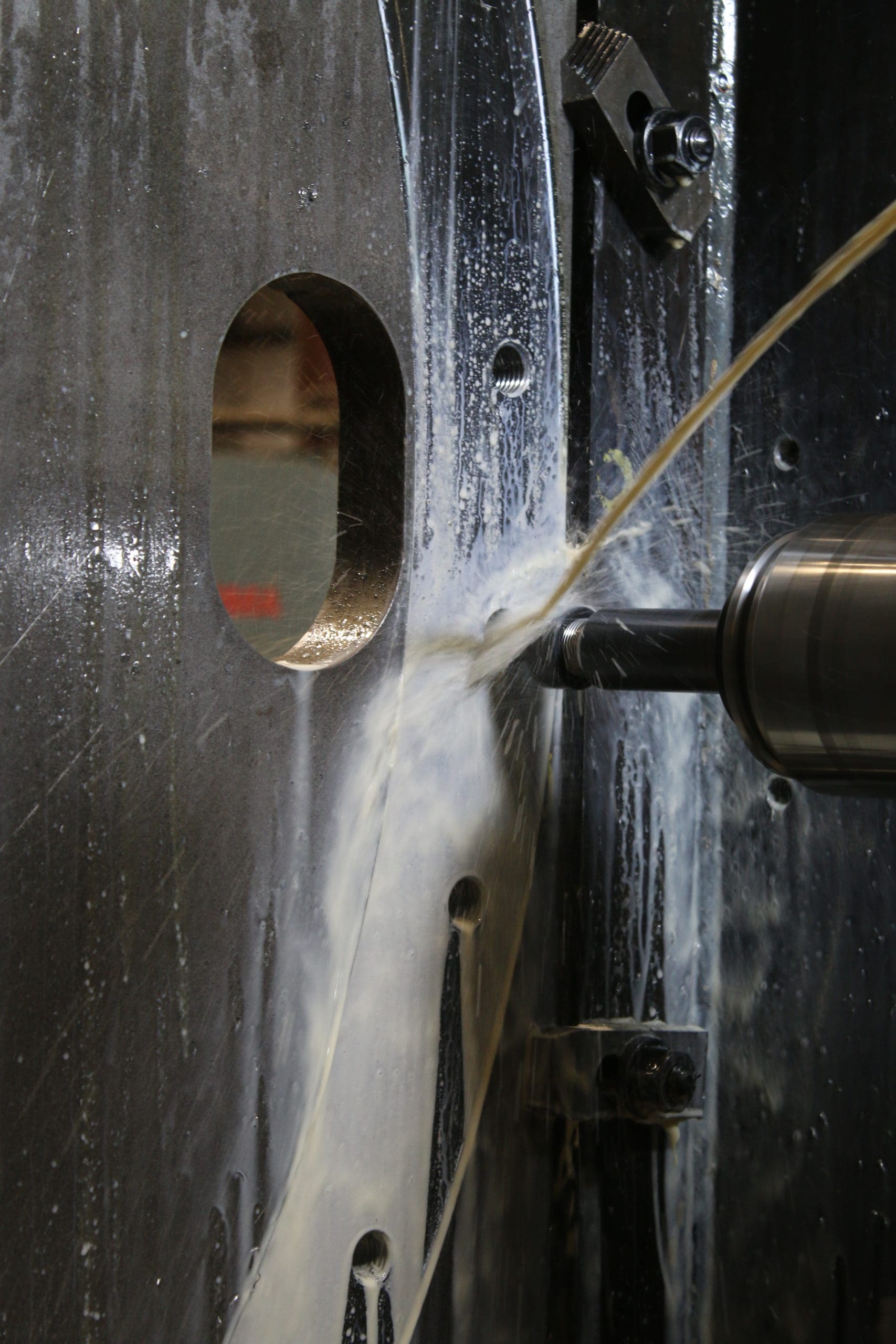
For precision features, the machine shop takes over. Bearing bores, shaft fits, and sealing surfaces live or die at the machining center or lathe. A good machining manufacturer will ask where parts are fixtured and how heat from operations like welding will move the material. On assemblies that see shock loads, I often specify reaming after welding and stress relief. For high-speed motion, coaxiality across multiple bearing blocks matters more than single-dimension tolerances. The best machinery parts manufacturers think in stacks, not isolated numbers.
Workholding deserves respect. If you want a ±0.02 millimeter bore but hold the part in a vise that bows it by 0.05 millimeter, you’ve paid for a fantasy. On large frames that can’t fit in a mill, bring the tool to the part. Portable precision boring and on-site line boring rigging save tear-down time and keep datum alignment with the machine’s reality, not a CAD dream.
Welding that respects the drawing and the reality
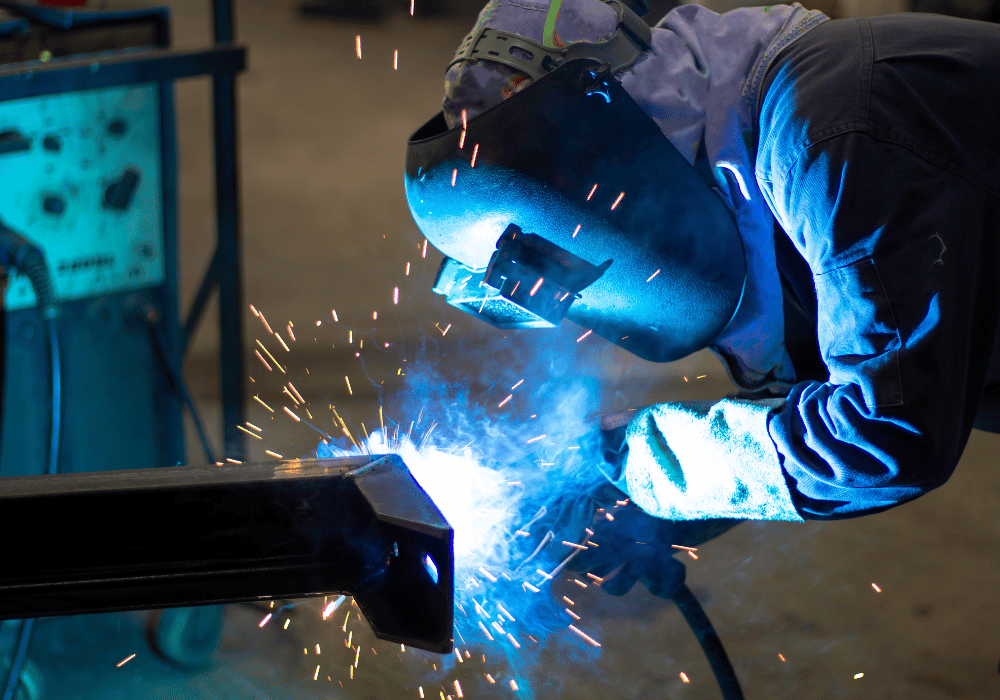
Welding remains the backbone of custom metal fabrication. Choice of process is situational. MIG dominates for structural frames. TIG earns its keep around hygienic seams and thin stainless. I’ve watched projects over-specify weld sizes and processes to “be safe,” then suffer from distortion and time loss. Welding size should match the load case and be supported by gussets where practical. Stitch welds reduce heat input and let large assemblies breathe.
Sequence matters more than most people think. Tack up with fixtures, bounce around to balance heat, and verify critical dimensions mid-process. A welding company with procedure qualifications, weld maps, and a culture of grinding less and fixturing more will deliver parts that drop into assembly. On stainless, respect heat tint and passivation. Blue and brown hues from overheated welds are corrosion invitations. A routine of pickling paste or citric passivation pays for itself long term.
Drives, controls, and the software spine
Even the most beautiful frame becomes a paperweight without reliable controls. The gossip about brand X versus brand Y PLCs misses the bigger questions. What does the plant maintain today? Which platforms do their technicians program by reflex? I’ve lost hours in plants where the only spare cards and expertise were Siemens, and an integrator prescribed Allen-Bradley because that’s what they knew. Choose a controls family that matches the facility unless you’re ready to train and stock spares.
Servo versus stepper is another judgment call. Steppers are economical and reliable for modest speeds and loads, but they lose torque at speed and can skip steps when pushed. Servos add feedback, higher dynamic performance, and smoother profiles, which matters for precision placement or variable-speed applications. Pneumatics still shine for simple clamp and eject tasks. They are cheap, fast, and tolerant of dust, but lack position control unless you add sensors and valving complexity.
Interlocks and safety circuits deserve early attention. You cannot bolt on safety at the end without expensive do-overs. Risk assessments drive guard design, light curtains, and e-stops. I prefer hardwired safety relays for simple cells and certified safety PLCs for multi-zone systems. Write the safety narrative like a story an inspector can follow. Where do forces live? What stops motion? What keeps energy locked out during maintenance? The best integrators build safety and motion profiles together, then simulate them before wiring begins.
The choreography of assembly and commissioning
Assembly is where quality planning either pays off or exposes shortcuts. Work in subassemblies that you can inspect and test on a bench. Check fits dry before sealing fasteners. Torque values aren’t suggestions. Neither is Loctite. Every fastener spec should have a reason. For units that must be washed down, document gasket types and compression ranges so technicians don’t over-torque and squeeze life out of seals.
Commissioning is a dance. Bring power up slowly. Test homing routines without load. Verify sensors with a diagnostic HMI screen before you throw product at the system. Even the best plan will reveal interference, noise, and edge cases. I keep a running defect log with owners and deadlines, and I stage spares of cable, proximity sensors, and couplers because those are the first to fail or get damaged in the heat of debugging. Nothing deflates a launch faster than waiting two days for a ten-dollar sensor.
Give operators a safe sandbox. Once the machine runs empty, add material and let the team provoke faults on purpose. Jam the conveyor, open doors, cut air, simulate a power blip. Make sure the system fails safe and recovers repeatably. Invite maintenance into the process, even if it slows you down for an afternoon. They will surface configuration quirks like IP address conflicts, network switch limitations, or lube policies that don’t match your design.
Economics that stand up to scrutiny
Capital projects win or die on economics, not on elegance. I encourage buyers to model cost arcs with brutal honesty. First costs are obvious. Hidden costs aren’t. Plan for engineering change orders, rush premiums on specialty components, and freight that spikes when a crate misses a consolidated shipment. Budget a realistic spare parts kit. It’s cheaper to stock a spare servo drive than to watch a line sit for three days while a courier clears customs.
Operational costs deserve equal scrutiny. Compressed air is not free. Pneumatic-heavy systems look cheap up front, then quietly burn money every hour through leaks. Servo sizing affects electricity use as well as heat in the panel. Fit for purpose beats gold-plated every time, but ignore consumption and you’ll feel it month after month.
Payback and ROI models should include learning curves and ramp-up scrap. I’ve seen scrap rates start above 10 percent in the first two weeks on complex packaging equipment, then settle below 1 percent once operators mastered the settings. Tie vendor payments to milestones that measure outcomes, not just deliveries. When a contract manufacturing partner agrees to a performance test on-site, their priorities align fast.
Choosing the right partners
Custom industrial equipment manufacturing is a team sport. The best projects assemble a group that covers design, fabrication, machining, controls, and field service with no weak links. When you evaluate a metal fabrication shop, walk the floor. You can smell whether they live 5S. Look for welding procedure specs on the wall, material certificates tied to racks, and WIP that is tagged with job numbers and revision levels. For a machine shop, ask to see how they manage tool libraries, inspect first articles, and track nonconformances. A machinery parts manufacturer that treats inspection as a gate, not a formality, keeps you off the rework treadmill.
For CNC metal fabrication, ask about fiber laser capacity, press brake tonnage and accuracy, and how they handle tight bend radii without cracking. Probe their experience with aluminum and stainless since springback varies. For steel fabrication, find out how they stress-relieve and how they handle large assemblies that need machining after welding. A steel fabricator who owns or has access to a large-format CNC bridge mill eliminates a painful vendor hop.
Controls integrators should show a library of reusable function blocks, a version control system, and a test bench with the PLC brands your plant supports. A welding company, whether in-house or a partner, should share WPS and PQR documentation and be transparent about welder certifications.
For contract manufacturing that spans multiple disciplines, judge their program management. Do they run critical path schedules? Do they share risk registers? Do they have contingency plans for long lead components like ballscrews, specialty bearings, or safety scanners that sometimes quote 12 to 20 weeks?
Managing risk across the lifecycle
No one can eliminate risk, but you can make it visible and manageable. Long lead items are the first trap. Lock those early and approve drawings quickly. Obsolescence is the second. Control vendors change firmware or discontinue modules without fanfare. Freeze versions for the project and buy spares on the same firmware. Environmental factors are underestimated. If your machine lives near a furnace bay, spec panels with proper ventilation and derate drives for ambient temperatures. For cold rooms, heater strips in enclosures prevent condensation. Dust and conductive contaminants, like carbon or aluminum fines, call for sealed cabinets and positive pressure air.
Cybersecurity has crept into factory floors. If you plan remote support, work with IT on VPNs and segmented networks. Avoid backdoors that operators might create in the name of convenience. Label network drops and document IP schemes. I’ve stood in bays where three devices fought over the same address because “it worked in the shop.”
Change control prevents chaos. When someone discovers a better bracket, a quicker sensor, or a cheaper valve, it’s tempting to slip it in. Log the change, assess impact, and retest. It takes discipline to keep a release baseline intact, especially during late-stage commissioning when fatigue sets in.
Documentation and training that people actually use
Binders no one opens help no one. Build documentation with the end user in mind. Short, task-based guides beat encyclopedias. Maintenance wants torque specs, part numbers, lubrication intervals, and exploded views. Operators want clear HMI labels, alarm responses, and clean routines for start, stop, and changeover. Training sticks when it is hands-on, delivered in the operating environment, and reinforced by supervisors. I favor short sessions over marathons, with quick refreshers during the first month as real-world hiccups appear.
Digital copies should live in a controlled repository, not just on a thumb drive taped inside a panel. Version control prevents the stale revision problem. For equipment that will travel across plants, create a quick-start card that fits in a pocket. I’ve seen those cards outlive entire MES systems.
Maintenance by design
Designing for maintainability saves more money than most bean counters appreciate. Access is the first hurdle. If a filter takes 30 minutes to reach, it won’t be changed on schedule. Standardize spare parts. If your plant stocks one brand of photoeye and one series of valves, use them unless there’s a principled reason not to. Build in diagnostic points, like test ports on pneumatics and current sensors on motors, so technicians can measure without disassembly.
Lubrication choices matter. Automatic lubrication systems shine on multi-shift equipment with hard-to-reach bearings, but they demand clean grease and checked lines. If the plant culture leans manual, keep zerk fittings accessible and visible. On stainless equipment, choose lubricants that won’t stain or trap debris.
When to automate and when to keep it simple
Not every problem needs a robot or a servo axis. I’ve replaced a servo-controlled part shuttle with a cam-driven mechanism that ran faster and never drifted out of calibration. Conversely, trying to force a pneumatic cylinder to perform delicate placement can waste more time than a simple servo would cost. The right level of automation sits at the intersection of precision, speed, and variation in the product set.
The same balance applies to sensing. Vision systems can solve a lot, but they add lighting, calibration, and software upkeep. A well-placed hard stop and a proximity sensor sometimes deliver 95 percent of the benefit with 10 percent of the headache. On the other hand, if you have twenty SKUs with subtle geometry differences, vision earns its keep by adjusting to variation you can’t fixture away.
Real stories, real lessons
A packaging line project taught me a lot about interfaces. The custom filler sang in the shop. On the plant floor, every time a pallet jack rattled past, the load cell readings wandered. We chased noise and firmware for two days before a mechanic pointed at the floor. The concrete slab near the base was full of hairline cracks. Vibration coupled into the frame. The fix wasn’t code. We installed isolation mounts matched to the weight distribution, then re-ran the calibration. Stable ever since.
Another job involved a high-temperature conveyor feeding a quench tank. We specified stainless rollers and chains, but failed to account for expansion on a long run. After the first hour, the chain tension skyrocketed. The solution was simple in hindsight: expansion joints in the frame and a floating idler. We added them, and the system ran cool, figuratively and literally. These are the kinds of oversights that a seasoned steel fabricator Industrial manufacturer or machinery parts manufacturer can flag if they’re brought into the design review early instead of treated as order takers.
The case for local and the case for global
Sourcing strategy is not ideology. A local metal fabrication shop gives you speed, easier oversight, and lower freight risk for bulky frames. A specialized machining manufacturer half a continent away might have the five-axis capacity you need for a complex manifold at a price and lead time your region can’t match. Blended strategies work. Build the heavy weldments nearby, ship them to a contract manufacturing partner with deep controls expertise, then complete final assembly and FAT close to the end user.
If you go global, don’t skimp on standards. Agree on material specs that translate across regions, like ASTM to EN equivalents. Validate a sample lot before greenlighting production volumes. Time zones can be an ally if you plan handoffs so someone is always working while the other sleeps. They become a curse without a single source of truth and a named owner on both sides.
What success looks like
A successful custom industrial equipment project feels unremarkable a few months after start-up. Operators treat it like a familiar tool. Maintenance sees fewer calls than the old line. The HMI matches the plant’s conventions. Spare parts sit on the shelf, labeled and used in predictable intervals. Performance numbers, whether throughput or first-pass yield, land where the contract said they would. Achieving that boring reliability rarely comes from heroics. It comes from the unglamorous work of aligning stakeholders, documenting decisions, validating assumptions, and choosing partners who know how to say no when a change threatens the foundation.
Below is a short checklist I keep close when guiding teams from concept to capability. It’s not exhaustive, but it catches the items that most often make the difference.
- Freeze critical requirements early, including utilities, safety category, and controls platform supported by the plant. Lock long lead items and spares at the same firmware and model versions, and document them in the parts list. Validate weld sequences and plan for post-weld machining or stress relief on precision assemblies. Build a commissioning plan that tests fault responses and recovery, not just steady-state operation. Train operators and maintenance with hands-on sessions, then schedule refreshers after real production begins.
Custom industrial equipment manufacturing sits at the junction of design discipline and shop-floor pragmatism. It takes an industrial design company with empathy for the operator, a steel fabricator who understands heat and alignment, a machine shop that thinks in datums and stacks, and a controls team that respects the facility’s standards. It benefits from a welding company that maps welds and a contract manufacturing partner who keeps the schedule honest. When those pieces fit, the result is not a machine, but a capability that moves a business.
Waycon Manufacturing Ltd
275 Waterloo Ave, Penticton, BC V2A 7N1
(250) 492-7718
FCM3+36 Penticton, British Columbia
Manufacturer, Industrial design company, Machine shop, Machinery parts manufacturer, Machining manufacturer, Steel fabricator
Since 1987, Waycon Manufacturing has been a trusted Canadian partner in OEM manufacturing and custom metal fabrication. Proudly Canadian-owned and operated, we specialize in delivering high-performance, Canadian-made solutions for industrial clients. Our turnkey approach includes engineering support, CNC machining, fabrication, finishing, and assembly—all handled in-house. This full-service model allows us to deliver seamless, start-to-finish manufacturing experiences for every project.